

Nos publications
Manufacturing of Dysprosium-Iron Alloys by Electrolysis in Fluoride-Based Electrolytes. Electrolysis in a Laboratory-Scale Cell
Metall. Mater. Trans. 2018
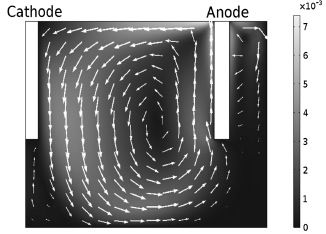
Electrolytic production of light rare earth elements and rare earth alloys with transition elements takes place in a fluoride-based electrolyte using rare earth oxides as raw material. The optimization of this method, mainly in terms of the energy efficiency and environmental impact control, is rather challenging. Anode effects, evolution of fluorine-containing compounds and side cathode reactions could largely be minimized by good control of the amount of rare earth oxide species dissolved in the fluoride-based electrolyte and their dissolution rate. The Dy2O3 feed rate needed for stable cell operation was studied by following up the anode voltage and gas analysis. On-line analysis of the cell off-gases by FTIR showed that the electrochemical reaction for the formation of Dy-Fe alloy gives mainly CO gas and that CF4 is starting to evolve gradually at anode voltages of ca. 3.25 V. The limiting current density for the discharge of the oxide ions at the graphite anode was in the range of 0.1 to 0.18 A cm2 at dissolved Dy2O3 contents of ca. 1 wt pct. Modeling of the laboratory cell reactor was also carried out by implementing two models, i.e., an electrical model simulating the current density distribution at the electrodes and a laminal bubbly flow model that explains the electrolyte velocity induced by gas bubble production at the anode.
Intervenants :
A. M.Martinez, K.S. Osen, A.Støre, H.Gudbrandsen, O.S.Kjos, A.Solheim, Z.Wang
SINTEF Industry, Sem Saelands vei 12, 7465 Trondheim, Norway
A.Oury, P.Namy
SIMTEC, 38000 Grenoble, France